FORCE NOTHING, GET EVERYTHING

There is a kind of exhaustion that has nothing to do with how much you have done. It comes from holding on too tightly — to outcomes, to timelines, to the idea that effort alone is what makes things happen. This book is an inquiry into what becomes available when you stop.

A 20-chapter
navigation guide
for living differently.

Draws on Taoism, Stoicism, Jungian psychology, Chaos Magick, Kabbalah, and the neuroscience of prediction and flow. Not because any single tradition has the whole answer, but because they all point at the same thing from different angles.

Available as a PDF. Read it once for the ideas. Keep it nearby for when you forget them — because you will, and that is also part of the practice.

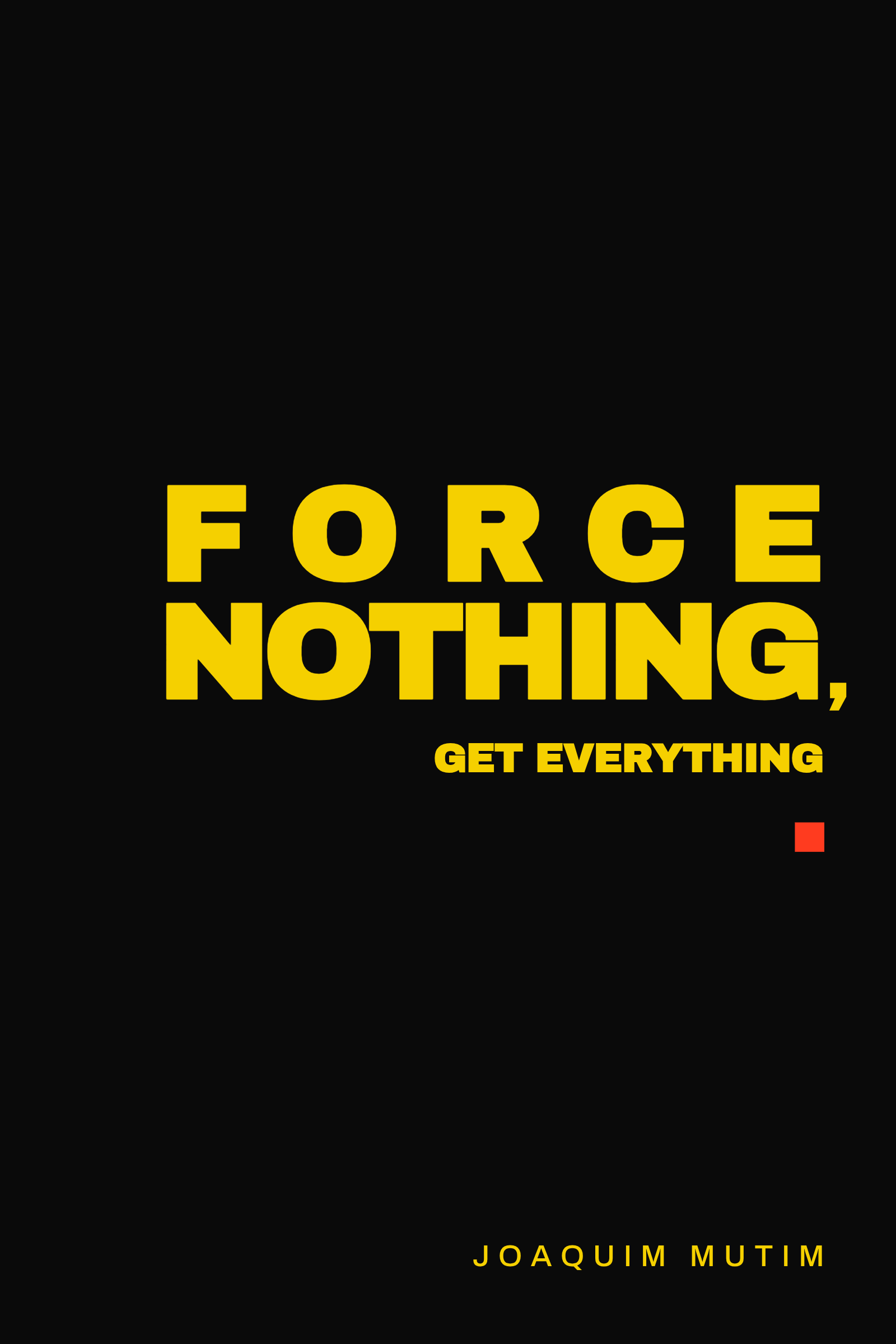
Force Nothing, Get Everything — book cover
"Most of what you want is on the other side of stopping trying so hard. Not stopping caring. Just stopping clenching."
FROM THE PROLOGUE · BETWEEN STATIONS

WHAT
CHANGES.

You stop mistaking tension for progress.
The feeling that you need to push harder is often the body's way of signaling that something is already off-course. You will learn to tell the difference between effort that opens and effort that closes — and what to do in each case.
Clarity starts arriving uninvited.
Poincaré solved one of the great mathematical problems of his era while stepping onto a bus. McCartney heard Yesterday in a dream. Kekulé saw the benzene ring in a nap. The book asks what these moments have in common — and how to make them less rare.
Recurring patterns become readable, not shameful.
The relationship dynamic that keeps finding you. The professional pattern that repeats in different rooms. These are coordinates, not verdicts. Once you can read them as navigational data, they stop feeling like evidence against you.
You move through resistance instead of against it.
The difference between a great swimmer and a good one is not strength. It is drag. They waste less. This book is about what it feels like to stop spending energy on unnecessary friction — in relationships, in work, in the private conversation with yourself.
Wanting feels less like an emergency.
The Backwards Law — named by Alan Watts, practiced in every contemplative tradition — says that the more urgently you pursue something, the more you confirm to your nervous system that you do not have it. The book is a long, patient investigation into what wanting without desperation actually looks like.
Difficulty stops feeling like a sign you are doing it wrong.
Flow states are not the absence of challenge — they live inside it. The chapters on amor fati and collective currents explore what it means to move with the forces in your life rather than spending yourself trying to make them stop.
This book does not promise that you will get everything you want.

It offers something closer and more useful: an invitation to notice what happens to your wanting when you stop treating it like an emergency. Most readers find that this changes what arrives — and what they realize they actually wanted in the first place.

JOAQUIM
MUTIM.

Joaquim Mutim is a Brazilian author writing at the intersection of philosophy, depth psychology, and the science of attention. This book grew out of twelve years of inquiry into why clarity tends to arrive the moment you stop chasing it — and what physics, neuroscience, and every major contemplative tradition say about that.

He does not ask you to believe any of it. He asks you to sit with it and see what happens.

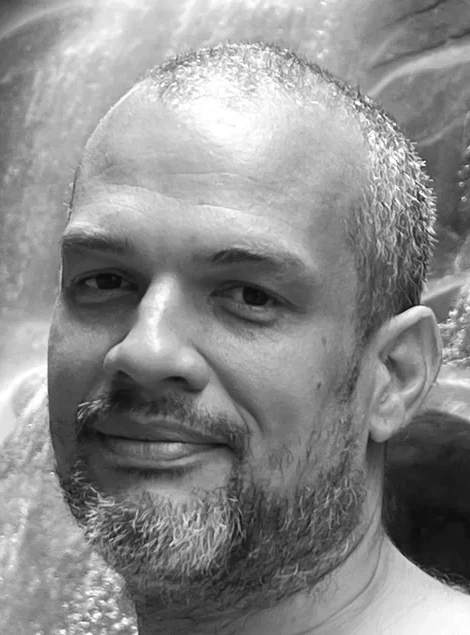
Joaquim Mutim
"The difference between a good swimmer and a great one is almost entirely a matter of not wasting energy on unnecessary resistance. They are not stronger. They are less forceful."
FROM CHAPTER 19 · OPEN HANDS
DRAWS ON
JUNG WATTS AURELIUS ZELAND CSIKSZENTMIHALYI HUXLEY ROSENBERG ANIL SETH EPICTETUS NIETZSCHE
STOP
FORCING IT.
Available as a PDF. Download immediately after purchase.